Open Source & Releases

Source code, datasets, and documentation from the International Digital Oral History Lab

The Lab releases its software, datasets, and documentation as open source, in keeping with the FAIR principles (Findable, Accessible, Interoperable, Reusable). The repositories below underpin our research, and we invite the wider community to inspect, reproduce, and extend the work.

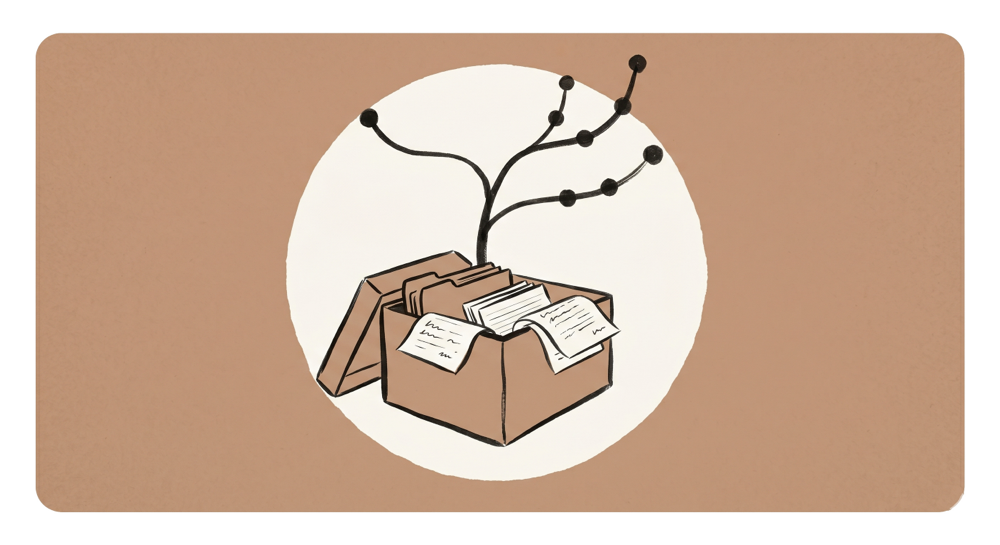
Hand-drawn illustration of an open archive box of documents with a branching network of nodes growing out of it, evoking oral-history records transformed into a knowledge graph.

MDOH Project

Multimodal Digital Oral History
Multimodal Analysis Sound as Data Digital Hermeneutics Laughter Detection

MDOH develops methodologies and technical workflows for active engagement with the oral, aural, and sonic affordances of oral history collections — across both retro-digitised and born-digital materials. The project treats oral history artifacts as multifaceted resources rather than text-only objects, working across multiple representational modalities.

Central to MDOH is a commitment to reflexive digital practice. While leveraging computational approaches, the project remains attuned to oral history as a subjective and intersubjective meaning-making process, situated within specific cultural, temporal, and technological contexts.

Repository Structure ├── data/ — released datasets and documentation ├── docs/ — methodology notes and workflow descriptions ├── src/ — reusable code, pipelines, and utilities ├── notebooks/ — exploratory analysis and prototypes └── outputs/ — reproducible figures, tables, and exports
View on GitHub

MeDoraH Project

Transforming Oral History Research Through Semantic Technologies
Semantic Web Natural Language Processing FAIR Data Knowledge Graph

MeDoraH is a collaborative research project between UCL and TU Darmstadt, developing innovative digital methods for oral history research. The project integrates semantic web technologies with historical-interpretative analysis to understand the evolution of Digital Humanities.

Bridging computational methods and humanistic inquiry, MeDoraH provides a comprehensive framework for representing oral history interviews, their metadata, and associated analytical data — designed to support advanced content analysis, facilitate interdisciplinary research, and adhere to FAIR data principles.

File Management
Digital library capturing technical metadata, provenance, and file relationships.
Content Modelling
Detailed models representing structure, semantics, and relationships.
Enrichment
Representing complex relationships for advanced querying and knowledge discovery.
View on GitHub
MeDoraH · Desktop Application

NarraGraph

From Narrative to Network.

  • Statusv0.4 · Released
  • PlatformsmacOS · Linux · Windows
  • StackTauri 2 · React 19 · Rust
  • ReleaseOpen source, via MeDoraH_NLP

The Lab's flagship desktop application for oral history research. NarraGraph turns interview transcripts and archival narratives into formal, queryable knowledge graphs through a five-stage hermeneutic pipeline, with every machine-suggested annotation attributed, reviewable, and reversible.

Multi-provider LLM extraction across Claude, Gemini, and OpenAI, or fully offline with local models. Interactive network analysis with community detection, eight centrality metrics, path tracing, and hop-distance filtering.

A visual ontology canvas with CIDOC-CRM alignment and one-click SPARQL export. The corpus-grounded Research Copilot answers questions with cited evidence, while the Hermeneutic Co-pilot reads network structure back as narrative.

MeDoraH_NLP

NLP Toolkit & Text Mining Suite
Workbench Workflow Hermeneutic Analysis Clustering Visualisation

The supporting research repository that hosts the NarraGraph release stream alongside the broader collection of reproducible workflows, preprocessing utilities, and clustering experiments that surround it. Where NarraGraph is the application, MeDoraH_NLP is the methodological workbench behind it: the scripts, notebooks, and evaluation harnesses that researchers can fork to reproduce or extend our text-mining pipelines.

Workflows
End-to-end pipelines for information extraction and knowledge graph construction.
Preprocessing
Segmentation, sentence boundary detection, and context-aware pair generation.
Visualiser
Interactive visualisation of the ontology structure and graph data.
Hybrid Clustering
LLM embedding paired with prompt-based assignment for concept discovery.
View on GitHub

MeDoraH_Ontology

Ontology & Schema Definitions
Ontology Design Guidelines FAIR Data Metadata

Ontology and schema definitions supporting FAIR data principles and semantic enrichment for oral history research. This repository provides the formal knowledge representation layer that underpins the entire MeDoraH technical infrastructure.

Core Ontology
OWL/RDF ontology with domains: Actor, Event, Artefact, ConceptualItem, SpatialEntity, TemporalEntity.
Metadata Schemas
Standardised schemas for technical metadata, provenance, and relationships.
Properties
Relation definitions, domains, ranges, and specialisation hierarchies.
View on GitHub

Contribute to Open Research

We welcome contributions from the community — whether bug reports, documentation improvements, methodological critiques, or new implementations. All repositories follow open-source best practices.